Mangiafoco
Pinocchio (Tania Zamorsky Edition)Mangiafoco is the puppeteer whose grotesque appearance and command over life and death in his theater make him seem monstrous, but whose decisive actions reveal a capacity for pity. He is introduced as a threat to Pinocchio and the troupe; twice, however, the threatened sacrifice is interrupted by compassion. His mercy saves Pinocchio and Arlecchino, while his gift of five gold coins sets up Pinocchio’s next encounter with the Fox and the Cat.
Identity and Entrance
Mangiafoco first appears after the puppets carry Pinocchio in triumph before the footlights, disrupting their performance. His entrance stops the celebration at once: the puppets fall silent and tremble. The contrast is immediate—moments earlier the theater rang with noisy excitement; now its inhabitants are frightened into stillness by the arrival of the man who commands them.
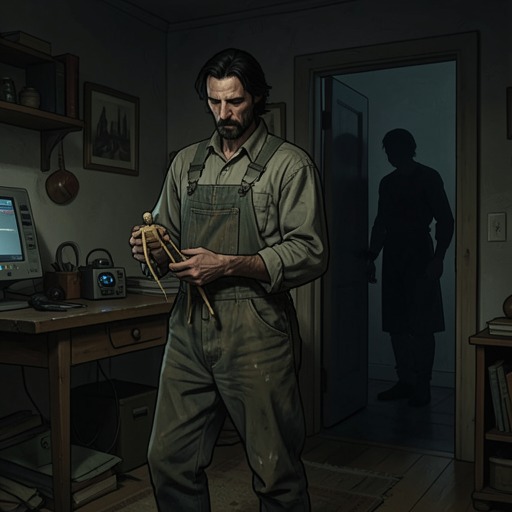
His body is described in deliberately exaggerated, grotesque detail. A long black beard, compared to an ink scribble, hangs from his chin to the ground, and he steps on it as he walks. His mouth is as wide as an oven, his eyes resemble glass lanterns glowing red from within, and he snaps a large whip woven from snakes and fox tails. The objects surrounding him anticipate the danger he poses: the oven-like mouth and the whip make his authority appear both bodily and violent. His voice, too, has the grave, rough quality of an ogre’s. The spectacle encourages fear before his character has been fully disclosed.
Authority and Threat in the Theater
Mangiafoco demands to know why Pinocchio has caused disorder in his theater and says that they will settle accounts after the performance. That delayed threat keeps the danger alive while the show continues. Once the play ends, he goes to the kitchen, where a mutton roast turns slowly on a spit. Lacking enough firewood to finish cooking it, he orders Arlecchino and Pulcinella to bring him the puppet hanging on a nail. He judges Pinocchio’s wood dry enough to make a fine flame.
The order makes Mangiafoco’s control brutally practical: Pinocchio is treated not as a performer but as fuel for the meal. Arlecchino and Pulcinella hesitate, yet obey after their master gives them a threatening look. They carry Pinocchio to the kitchen as he struggles and cries out that he does not want to die, calling on his father to save him. Mangiafoco’s threat is therefore not merely a frightening appearance; it is backed by the power to turn a puppet into the means of cooking dinner.
Compassion and the Rescue of Arlecchino
When Mangiafoco sees Pinocchio brought before him, still struggling and pleading, his reaction alters the scene. Though he resists for a while, he is moved to pity and finally gives a loud sneeze. Arlecchino, who had been bent with grief, recognizes the sneeze as a sign that Mangiafoco has softened and that Pinocchio is safe. A small bodily gesture thus breaks the terrifying authority established by his entrance: the master who seemed capable of reducing a puppet to kindling proves susceptible to another’s distress.
Mangiafoco’s mercy toward Pinocchio creates the next test. Pinocchio asks him to spare Arlecchino, but Mangiafoco insists that someone must go into the fire if the roast is to cook properly. Pinocchio then stands up, throws away his cap made of bread crumb, and offers himself in Arlecchino’s place. He calls Arlecchino his true friend and refuses to let him die on his account. The other puppets weep at the declaration, as do the two wooden Carabinieri present at the scene.
At first Mangiafoco remains rigid, like a piece of ice. Then he too is moved, sneezes four or five times, opens his arms affectionately, and grants Arlecchino’s pardon. The decision changes the immediate cost of his mercy: he accepts that the mutton will be only half-cooked that evening rather than sacrifice another puppet. The troupe’s fear gives way to celebration; the puppets return to the stage, light the lamps and chandeliers as for a gala, and dance until dawn.
The Coins and Narrative Role
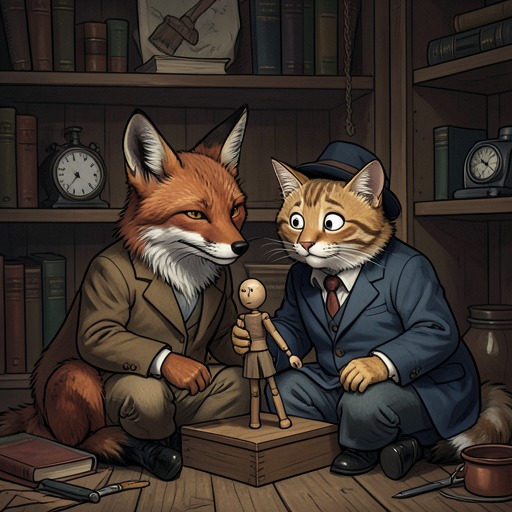
The next day Mangiafoco calls Pinocchio aside and asks the name of his father. He gives Pinocchio five gold coins to take to Geppetto. The gift extends his generosity beyond the theater: after sparing Pinocchio and Arlecchino, he provides money intended for Pinocchio’s family. Yet the intended help does not lead directly to Geppetto. Pinocchio instead allows himself to be deceived by the Fox and the Cat and goes away with them.
Mangiafoco’s part in the story is shaped by reversals between frightening appearance and humane action. His theater has a hierarchy enforced by fear, and his first plan makes a puppet’s material body seem expendable. But the narrative twice turns the expected outcome aside through pity: first when Pinocchio’s cries move him, and again when Pinocchio risks himself for Arlecchino. His generosity remains limited to these concrete acts—the two pardons and the coins—and does not prevent Pinocchio from falling into a new deception. In that contrast, Mangiafoco becomes an unexpectedly merciful figure in an episode where danger is real, compassion has immediate consequences, and good fortune does not ensure that Pinocchio will choose wisely.